Prompt Engineering Guide 2026: What the Research Actually Says
Most of the prompt engineering advice circulating in 2026 was written in 2022. That’s a problem, because the models have changed dramatically and the research has moved on.
The “just say ‘let’s think step by step'” advice? Tested and found wanting by researchers at Wharton. The “always use few-shot examples” rule? A 2026 empirical study found that for larger, specialized models, few-shot examples can actively degrade performance compared to zero-shot. The “be as specific as possible in your system prompt” guideline? Also empirically contradicted.
None of this means prompting doesn’t matter. It does, and significantly. But if you’re optimizing your prompts based on a Medium article from 2023, you’re probably optimizing for models that no longer exist. Here’s what the research actually says about what works now.
Table of Contents
What Prompt Engineering Actually Is
Before getting into techniques, it’s worth being precise about what a prompt contains. Schulhoff et al.’s 2024 systematic survey of prompting — which catalogued 58 distinct text-based prompting techniques across the research literature — breaks a prompt down into six functional components:
A directive is the core instruction telling the model what to do. Examples demonstrate the format or quality you want (this is the few-shot component). Output format instructions specify how the response should be structured: JSON, markdown, a list, a specific length. Style instructions govern tone and register. A role primes the model’s perspective (the “you are a…” construction). And additional information is context the model needs but wouldn’t have otherwise.
Most people use two or three of these. Strong prompts tend to use all six, deliberately. The question isn’t whether to use them — it’s which combinations produce reliable results for which tasks, and that’s where the research gets interesting.
Zero-Shot Prompting: More Capable Than You Think
Zero-shot prompting means giving the model instructions with no examples at all. The conventional wisdom says it’s a fallback, something you use only when you can’t be bothered to write examples. The research paints a more nuanced picture.
For modern frontier models, zero-shot with a clear, specific directive performs remarkably well on tasks that involve understanding and generation. The reason connects directly to how these models are trained — understanding how language models internalize instructions helps here, and the how large language models work post covers the pre-training and instruction-following mechanics in detail.
The practical implication: don’t reach for few-shot examples automatically. Start with a well-constructed zero-shot prompt. If the output isn’t what you need, then diagnose whether the issue is a missing example or a missing instruction.
Few-Shot Prompting: The Quality of Examples Matters More Than the Quantity
Few-shot prompting gives the model a small number of input-output pairs before presenting the actual task. The assumption is that more examples equal better performance. The research says it’s more complicated.
Schulhoff et al.’s review of the prompting literature identified several example design decisions that significantly affect performance, and they often matter more than how many examples you provide:
Example ordering is not neutral. Research has shown that the order in which examples appear affects the output. Recency matters: models tend to bias toward patterns seen in later examples. If your task involves multiple output categories and your last few examples all represent one category, your output distribution will skew toward it.
Example quality beats example quantity. The review found that the similarity of examples to the actual task inputs was a stronger predictor of performance than raw count. An example that closely mirrors the structure of your real query does more work than three generic examples.
Wrong-label examples are less disastrous than expected, but still bad. Interestingly, some research found that even random labels in few-shot examples can sometimes preserve most of the performance gains, suggesting what matters is demonstrating the output format and structure, not just the correct answers. That said, correct labels reliably outperform random ones.
The counterintuitive finding: A 2026 empirical study across 360 configurations found that for larger, code-specialized models, few-shot examples actually degraded performance relative to zero-shot generation. The paper attributed this to misalignment between the structure of the examples and the model’s preferred generation pattern. The lesson: test zero-shot before assuming few-shot will help.
Chain-of-Thought Prompting: Genuinely Useful, But Not for the Reasons You Think
Chain of thought (CoT) prompting is where the research has moved most significantly. The original finding, from Wei et al. at Google Brain in 2022, was striking: showing a model reasoning steps as part of a few-shot example unlocked significant reasoning capability. On the GSM8K math benchmark, providing PaLM 540B with just eight chain-of-thought exemplars surpassed even a fine-tuned GPT-3 with a verifier. The capability improvement was real, and it was an emergent property of model scale — small models saw no benefit.
The simpler zero-shot version — appending “let’s think step by step” to a prompt — was then popularized as a near-universal improvement. That advice spread widely, and it was reasonable at the time.
In June 2025, researchers at the Wharton School tested this assumption rigorously. Their study of CoT across eight major models — testing each question 25 times each against a PhD-level benchmark — produced findings that complicate the simple narrative.
For non-reasoning models, explicit CoT prompting improved average performance modestly. But it also introduced more variability — sometimes causing the model to get questions wrong that it would have answered correctly with a direct prompt. More importantly, the study found that many modern models already engage in CoT-style reasoning by default without being prompted. For those models, explicitly asking for step-by-step reasoning produced little additional benefit, because the model was already doing it.
For reasoning models — those with built-in deliberation like o3-mini, o4-mini, and Gemini Flash 2.5 — explicit CoT prompting yielded only marginal accuracy gains while increasing response time by 35 to 600 percent.
The practical takeaway from this research: CoT is still a useful technique for non-reasoning models on complex reasoning tasks, especially if the model doesn’t default to stepping through problems. But it’s not a universal upgrade, and for reasoning models it’s often redundant and expensive.
System Prompts: Specificity Is Not a Free Lunch
The system prompt sits above the conversation and frames the model’s behavior throughout an interaction. Most guidance says to be as detailed and specific as possible. The research is more conditional.
A 2026 empirical study systematically varied system prompt specificity across four models, five system prompt variants, three prompting strategies, and two temperature settings — 360 configurations in total. The finding that stands out: increasing system prompt constraint specificity did not monotonically improve correctness. Prompt effectiveness was configuration-dependent, and high-specificity prompts could actually hinder performance when the specificity created misalignment with the task structure.
This doesn’t mean being vague is better. It means specificity should match what the task actually requires. A system prompt that constrains too tightly can prevent the model from exercising the flexibility needed to handle variation in user inputs. A system prompt that defines the output format too precisely can conflict with instruction-following when the ideal output for a specific input doesn’t fit the prescribed structure.
The practical implication: treat your system prompt as a living configuration. Test multiple versions, not just one increasingly specific version.
Temperature: What It Actually Controls
Temperature controls how deterministic the model’s outputs are. At temperature 0, the model always picks the highest-probability next token — outputs are fully reproducible. As temperature increases, lower-probability tokens get more consideration, which produces more variation and, in creative tasks, more novelty.
What most explanations miss: temperature also affects reliability at the task level. The 2026 study on clinical decision-making found that ChatGPT performed better under zero temperature, while Llama showed stronger performance at the default temperature. There is no universal correct setting.
The useful heuristic: lower temperature for tasks requiring precision and consistency (structured data extraction, classification, code generation), higher temperature for ideation, drafting, and creative work. But always validate empirically for your specific task rather than assuming.
Context Window: The Biggest Lever Most People Underuse
Context window is how much text the model can hold and process in a single interaction. In 2026, most frontier models handle 128k to 1 million tokens. Most practitioners are barely using this.
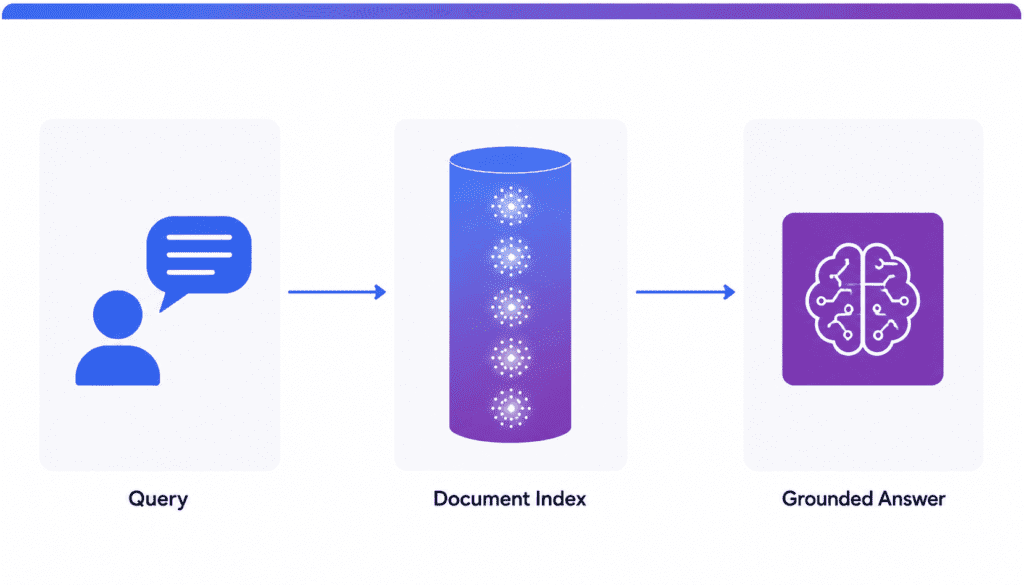
The research on in-context learning consistently shows that relevant context is often the highest-leverage input you can give a model. Not clever prompt tricks — relevant, high-quality information the model wouldn’t have otherwise. Telling the model to be thorough has limited effect. Giving the model the actual document, policy, or data it needs to reason over has significant effect.
Output format instructions also become more important as context grows. When a model is processing large amounts of input, specifying exactly how you want the output structured — field names, JSON keys, length limits, what to include and what to exclude — prevents the model from making formatting decisions that may not match your downstream needs.
The underrated technique: instead of elaborate prompt engineering, give the model more relevant context and clear output format instructions. Research repeatedly shows that context quality often outperforms prompt cleverness.
What’s Actually Hype in 2026
“Threatening” or “tipping” the model improves performance. A Wharton research report tested this explicitly, including endorsements from high-profile figures. The finding: these prompt variations generally have no significant effect on benchmark performance. Individual responses may vary, but there’s no reliable performance gain.
Elaborate persona descriptions make outputs significantly better. Research found negligible improvement from persona prompts on most structured tasks. The effect size was small enough that a clearer directive typically outperformed an elaborate role description.
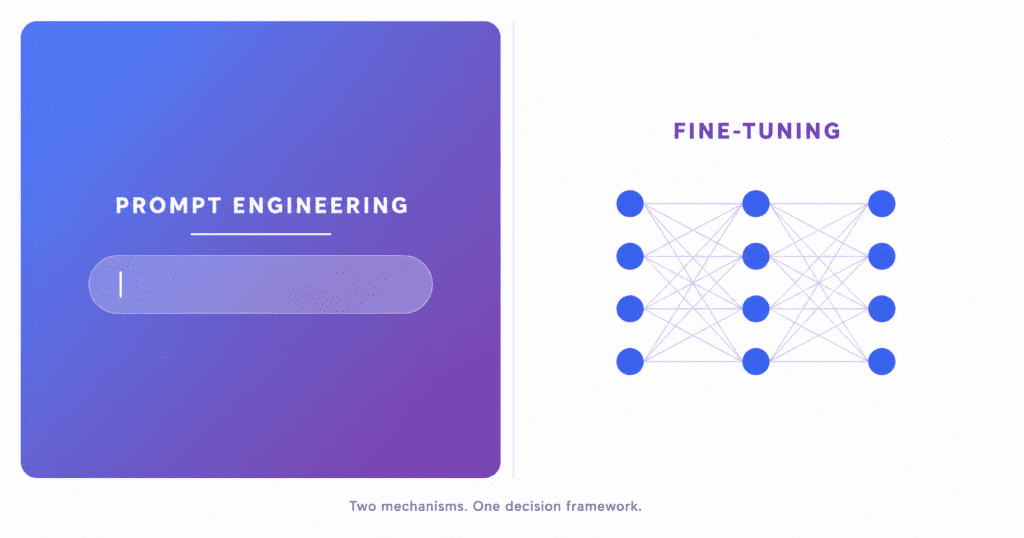
More prompt engineering always beats fine-tuning. Not for production systems at scale. Prompt engineering has real limits when you need reliable output format consistency, domain-specific behavior, or consistent adherence to constraints across thousands of varied inputs. This is the subject of a separate post, but the research-backed decision tree for when to prompt vs. when to fine-tune is worth understanding before you invest heavily in either.
The Honest Summary
What actually works: clear directives, relevant context, specific output format instructions, and few-shot examples when carefully matched to the task. Chain-of-thought for non-reasoning models on complex reasoning tasks. Zero-shot for everything else until you have evidence you need examples.
What’s declining in value: formulaic “think step by step” appended to every prompt, especially with reasoning models. Elaborate persona descriptions. Maximally specific system prompts without testing.
What to watch: automated prompt optimization tools (DSPy, ProTeGi, PromptWizard) are beginning to outperform hand-tuned prompts in research settings. The Wharton group’s broader finding — that prompt variations can significantly affect per-question performance in ways that are hard to predict in advance — suggests that systematic evaluation rather than intuition is increasingly the right approach.
Prompting is still worth doing carefully. The research just tells us to be more precise about what “carefully” means.
FAQ
How should I use the system prompt?
Use the system prompt to establish the model’s persistent role, constraints, and output format expectations for an entire session or pipeline. Keep specificity matched to what the task actually needs — over-specifying can hurt when rigid constraints conflict with handling varied inputs. Treat it as configuration you iterate on: test multiple versions rather than assuming more detailed equals better. For production pipelines, validate system prompt behavior across a representative sample of real inputs, not just a few hand-crafted test cases.
What’s the most underrated prompting technique?
Providing high-quality context. Before optimizing prompt wording, ask whether you’ve given the model the information it actually needs — the relevant document, the specific policy, the data excerpt. Research on in-context learning consistently shows that relevant context yields larger gains than prompt cleverness. Pair this with clear output format instructions, and you’ve covered the two highest-leverage inputs in a typical prompting problem.
What’s the difference between zero-shot and few-shot prompting?
Zero-shot prompting gives the model only instructions with no examples. Few-shot prompting includes a small number of input-output examples before the actual request. Zero-shot is simpler and often sufficient for modern frontier models on clear, well-defined tasks. Few-shot is worth adding when you need precise output format consistency or when the task involves a specific pattern the model doesn’t naturally follow. The research shows that the quality, ordering, and similarity of your examples to the real task matter more than the number of examples.
Does chain-of-thought prompting still work in 2026?
For non-reasoning models tackling complex arithmetic, logic, or multi-step problems, yes — chain-of-thought still improves average accuracy, though it also increases response variability. For reasoning models like o3, o4-mini, or Gemini Flash 2.5, the gains are marginal and come at the cost of significantly longer response times. Many modern non-reasoning models already reason step-by-step by default, making explicit CoT instructions redundant for those cases. The short answer: test whether your specific model benefits before defaulting to it.